The Real Cost of Decision Fatigue at Work
By 2 p.m., you’ve made dozens of decisions nobody will remember.
Which email to answer first. Whether that Slack message needs a reply now or later. Which task actually deserves the next hour.
None of them are hard on their own.
Together, they’re expensive.
The Decision Tax You’re Not Tracking
Every open decision costs attention, even before you decide.
It sits in the background, pulling focus from whatever you’re actually supposed to be doing.
By the time you reach the decisions that actually matter, the budget is gone.
Why More Willpower Doesn’t Fix It
The instinct is to push through. Decide faster by trying harder.
That works for a morning. Not for a career.
Willpower depletes. A decision process doesn’t.
A Faster Way to Decide
Most decisions don’t need deep analysis. They need two questions, asked in order:
- Is this reversible if I’m wrong?
- What’s the maximum time this decision is worth?
Reversible decisions get a time ceiling and a fast call. Irreversible ones earn the longer look, on purpose, not by accident.
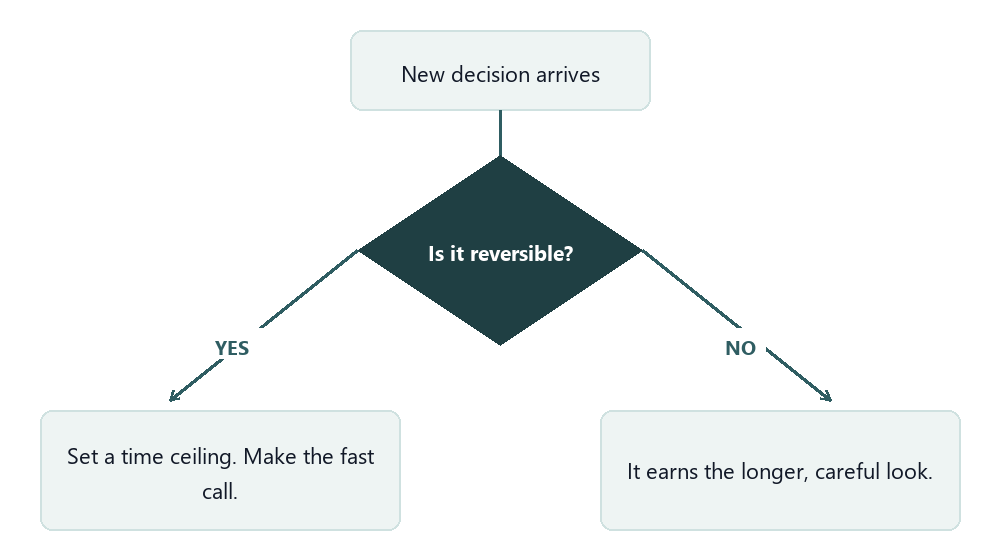
This is the core of the Rapid Decision Matrix, a simple framework for deciding at the speed most work actually requires.
What Changes When Decisions Get Faster
Small decisions stop competing with real work.
Attention goes where it belongs.
And the decisions that actually deserve your best thinking finally get it.